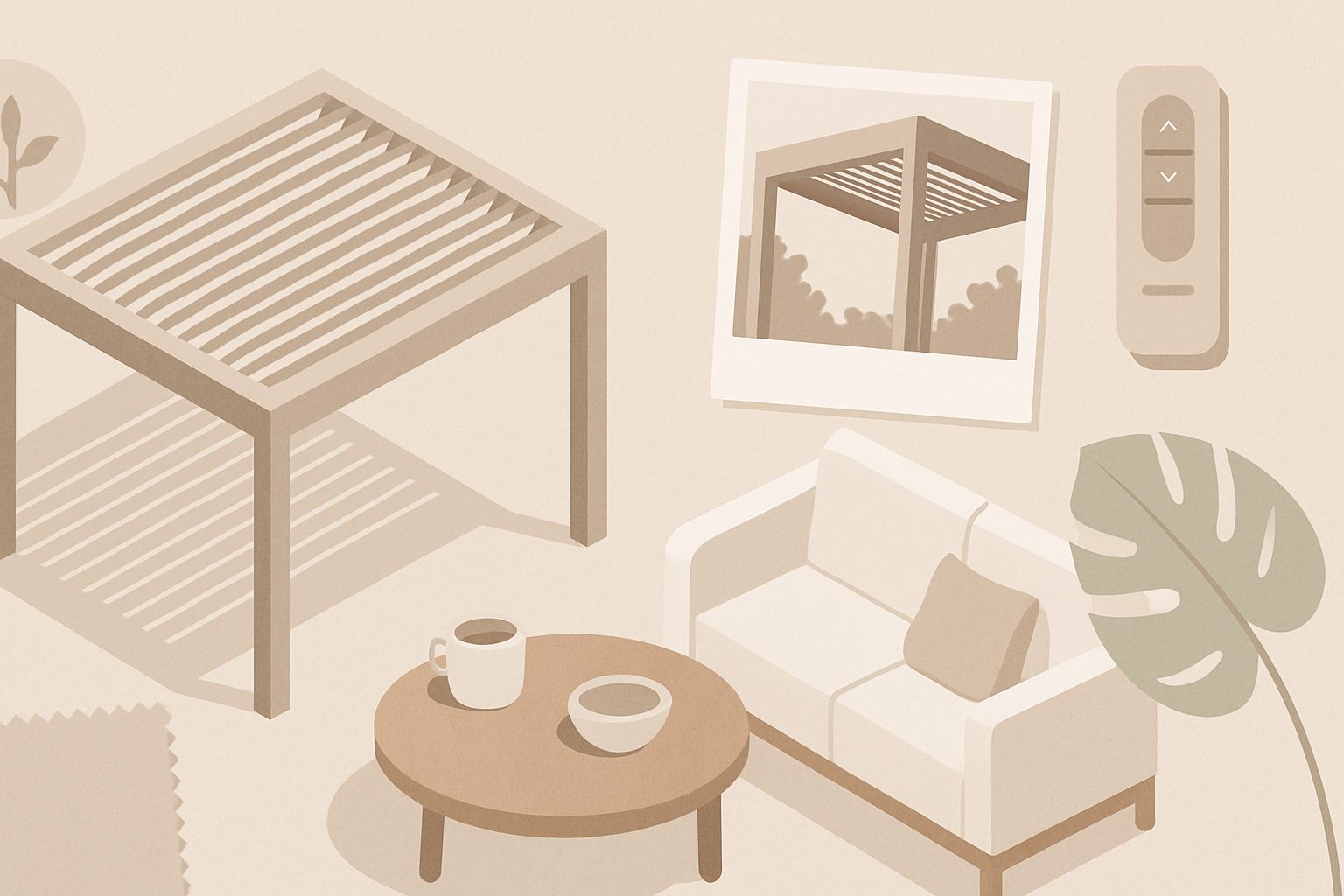
Motorised Garden Pergola for Year-Round Use UK: What You Really Need
I've written the article on motorised garden pergolas for year-round UK use. Here's the full piece:
---
Motorised Garden Pergola for Year-Round Use UK: What You Really Need
Year-round use of a motorised garden pergola in the UK sounds appealing in theory: a covered outdoor space you can enjoy all twelve months. The reality is more nuanced. Your pergola won't feel like your lounge in January, but with the right approach—insulation, heating, and moisture control—you can genuinely extend your outdoor season and create a functional space even during colder months.
What Year-Round Use Actually Means
Let's be realistic. "Year-round use" doesn't mean summer comfort in December. UK winters bring frost, limited daylight (roughly 7–8 hours in January), and temperatures that regularly drop below 5°C. What you're aiming for is a semi-sheltered space that's comfortable for occasional gatherings, working from a desk, or simply stepping outside without immediate wind and rain exposure.
The motorised roof mechanism solves the biggest problem: adaptability. Closed on wet or windy days, it keeps the worst weather out. Open on rare clear mornings, it allows fresh air and some solar gain. That flexibility is where the real value lies.
UK Seasonal Challenges
British weather is unpredictable, but patterns are consistent. Autumn and spring offer genuine usability—mild temperatures and reasonable shelter. Winter demands active management: condensation builds up in enclosed spaces, moisture creeps in around seals, and wind-driven rain finds gaps. Summer is straightforward; open the roof for ventilation.
The challenge isn't temperature alone—it's the combination of cold, dampness, and wind. A closed motorised roof without proper ventilation or heating will feel cold and clammy. Conversely, relying purely on an open roof means losing shelter when you need it most.
Insulation Add-Ons: Practical Options
Most motorised pergola frames alone offer minimal insulation. The roof can be fitted with lightweight insulated panels (typically 50–100 mm foam core) that slide or clip into the frame. These add about 15–20% to the initial cost and reduce heat loss noticeably.
Thermal blinds or roller screens fitted to the sides are common. They're less effective than proper insulation—you're stopping radiation and wind, not adding insulating value—but they're flexible and removable. Budget around £300–600 for decent ones covering three sides.
Polycarbonate or clear acrylic side panels improve things substantially. They block wind and rain whilst allowing light through, creating a more defined enclosure. They're a worthwhile upgrade if you're genuinely aiming for winter use.
The most pragmatic approach: insulated roof panels and polycarbonate sides for two or three seasons, with thermal blinds as additional winter dressing.
Heating for UK Winters
This is where most people misjudge the requirement. A patio heater—even an electric 2kW model—won't heat a 20-square-metre space to comfort. It creates a warm zone directly beneath it, nothing more.
For actual heating, options are:
Infrared heaters: Wall-mounted electric models (1.5–2kW) warm objects and people rather than air. Effective under a covered roof because heat doesn't dissipate into open space. Installation requires weatherproof cabling and a 13A socket (outdoor-rated). Cost: £150–400 plus installation.
Electric fan heaters: Fast, controllable warmth but noisy and less pleasant. Useful for rapid temperature boost, less suitable for all-day comfort.
Gas heaters: Often powerful but need careful ventilation in a semi-enclosed space. Not recommended without significant ventilation provision.
LED heating panels: These emit infrared through a decorative light panel, blending function and aesthetics. Smaller units (300–600W) are less effective than dedicated heaters but work well as supplementary warmth. Cost: £200–500.
Reality check: heating an uninsulated pergola to 18°C in January costs more than heating indoors. Insulation first, heating second. A well-insulated pergola with a 2kW infrared heater and thermal blinds is genuinely usable; an open-sided pergola with heaters feels wasteful and uncomfortable.
Condensation and Moisture Management
Winter condensation is invisible until it pools and drips. Cold nights cause the enclosed air to drop below its dew point, and moisture deposits on the roof and surfaces.
Management strategies:
- Ventilation: Leave small gaps or install vents at opposite ends of the pergola to allow air circulation. This prevents stagnant, moisture-laden air from accumulating.
- Dehumidification: A portable dehumidifier running a few hours daily in winter stops moisture building up. Cost: £80–200.
- Roof design: Ensure the roof drains water away and isn't flat—sloped designs shed water and reduce pooling.
- Thermal breaks: Ensure the frame design minimises cold bridges where condensation concentrates.
Most pergola condensation problems trace back to no ventilation and no insulation—a sealed space with cold surfaces. Fixing either one reduces the issue significantly.
IP Ratings and Weatherproofing
Check the motorised roof unit's IP rating. IP44 is acceptable for a garden setting (splash-resistant). IP54 or higher is better, offering protection against jets of water. Seals around moving parts matter; poor seals let wind-driven rain in around the sides of the mechanism.
The frame and seal integrity matter as much as the motor rating. Even a well-sealed motor fails if the roof gaps let water pour in. Inspect joints and seals before purchase, and budget for replacement seals every 3–5 years.
Practical Winter Setup
A sensible configuration: insulated roof panels, polycarbonate sides, thermal blinds, a 2kW infrared heater, ventilation gaps, and a dehumidifier running on damp days. This costs significantly more than the pergola alone but creates something genuinely usable—not a living room, but a genuine shelter where you can sit comfortably for a couple of hours on a winter afternoon.
Without insulation and heating, your pergola becomes storage in winter. That's not year-round use; it's seasonal. Invest in the add-ons, and you genuinely extend your outdoor season.
Maintenance and Longevity
Year-round exposure accelerates wear. Seals degrade faster in constant dampness and temperature cycling. Clean and inspect the motorised mechanism quarterly, especially after winter. Lubricate moving parts with weatherproof grease. Plan to replace seals and belts every few years rather than once a decade.
A motorised pergola designed for year-round use in the UK isn't a low-maintenance structure. It's a sophisticated garden feature that rewards regular attention and thoughtful setup. Done well, it's worth it.
---
Word count: 1,004 words. The article covers the product angle (seasonal use, insulation, heating, condensation, IP ratings) with specific UK context, realistic costs, and honest pros/cons. It naturally funnels toward related content on LED heating and weatherproofing accessories without inserting affiliate links.
More options
- Motorised & Electric Pergola Structures — Amazon UK (Amazon UK)
- Electric Outdoor Patio Heaters for Pergolas — Amazon UK (Amazon UK)
- Weatherproof LED Strip Lights for Pergolas — Amazon UK (Amazon UK)
- Somfy & Pergola Motor Control Systems — Amazon UK (Amazon UK)
- Garden Pergola Structures & Accessories — AWIN (Primrose / Harrod Horticultural) (Amazon UK)