Motorised Louvre Roof vs Glass Roof Pergola UK: Which Is Right for Your Garden?
When you're investing in a garden pergola, the roof material is the decision that affects your daily enjoyment most. Motorised pergolas have become the premium choice for UK gardens, but should you choose adjustable louvres or a fixed glass roof? Both have genuine merits, and the answer depends on how you'll actually use your garden and what matters to you in the British climate.
Thermal Comfort and Temperature Control
Glass roofs excel in winter and shoulder seasons. They trap heat beneath the glazing, creating a greenhouse effect that keeps the pergola warmer when the sun's low. On a cold March day with winter sun, a glass roof can feel noticeably cosier. That said, it's a double-edged advantage: come July, that same greenhouse effect becomes a liability. You'll face intense heat buildup unless you install separate external blinds or opt for expensive tinted glass options.
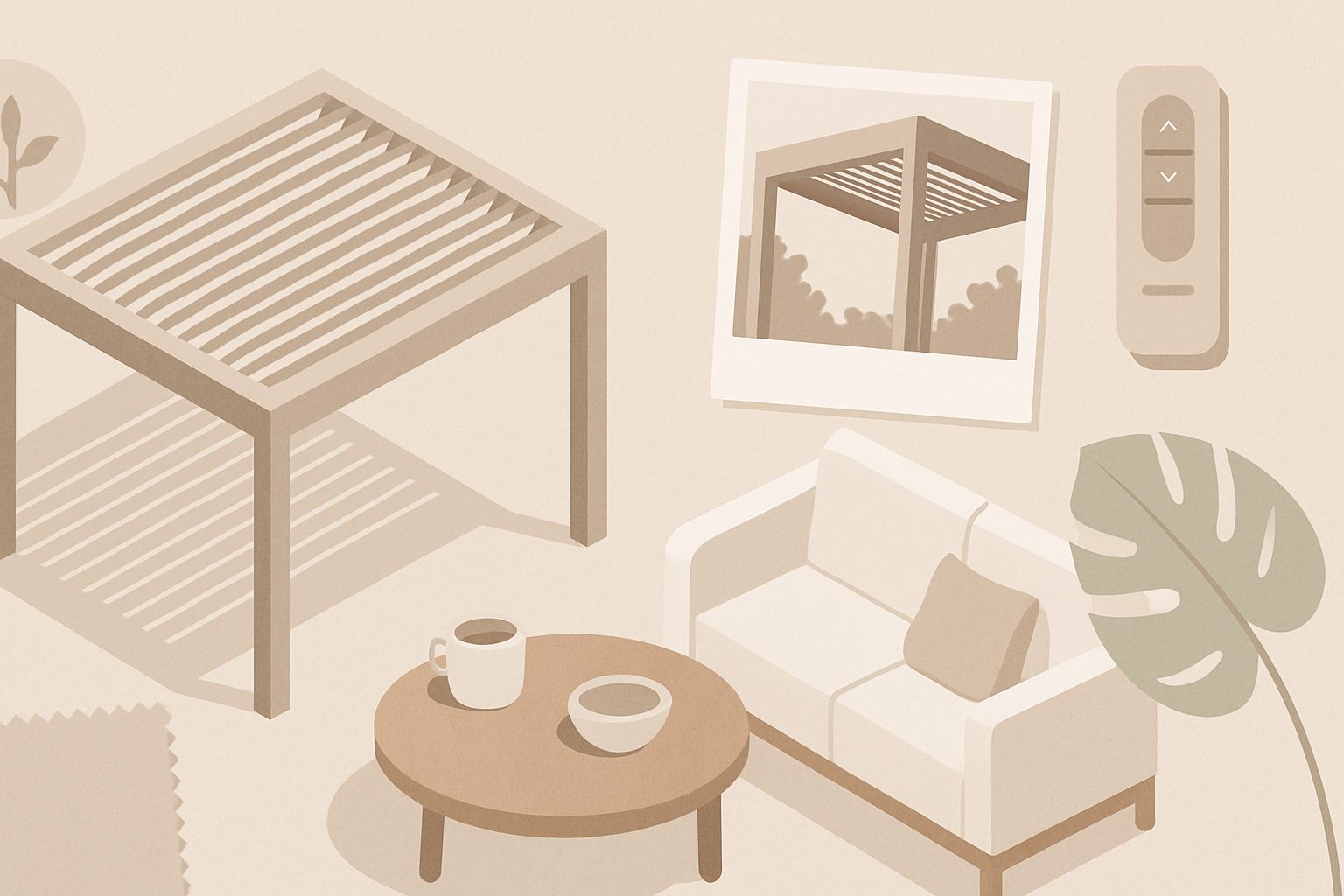
Louvre roofs adapt to the season and time of day. Close the slats and you've got almost complete sun protection—useful during intense afternoon heat or when you want to use the space in summer without feeling cooked. Open them on a crisp October morning and you get passive solar gain. The adjustment happens at the push of a button, so you're not locked into one setting. If summer heat is a real issue in your garden (especially if it faces south or west), louvres offer flexibility that glass simply doesn't. You're not paying extra for tinted coatings or fighting condensation in winter; you're controlling the environment directly.
Light Diffusion and Ambiance
Glass provides uninterrupted views of the sky and consistent natural light throughout the day. If you value that open, garden-room feel and don't mind slightly reduced light on overcast days, glass delivers it. The downside is glare: direct sun through glass can be harsh, and you'll notice it especially mid-morning and mid-afternoon.
Louvre roofs diffuse light in a completely different way. When partially open, they create that distinctive slatted shadow pattern—quite striking for outdoor entertaining. Fully open and you get similar light to glass, but without the glare intensity. Many people find this gentler light actually better for relaxation. It's subjective, but there's a reason garden designers often prefer louvres: they photograph well, they feel sophisticated, and they don't create harsh shadows on your table or loungers.
Maintenance and Durability
Glass roofs require regular cleaning to maintain their look. UK rain leaves mineral deposits, pollen settles on top surfaces, and bird droppings appear without fail. You're looking at quarterly maintenance minimum if you want it to stay pristine. The glazing also faces expansion and contraction stress across our seasonal temperature swings, and seals can fail after 10–15 years, leading to leaks and costlier repair jobs.
Louvre systems are lower-maintenance. The slats shed water and debris naturally when you open them. Occasional cleaning with a soft brush keeps them looking fresh. Moving parts (motors and linkages) do eventually wear, but quality systems are engineered for thousands of cycles. Replacement parts are straightforward and cheaper than replacing failed glazing seals. Over a 20-year ownership period, the maintenance cost difference is noticeable.
Insurance and Structural Considerations
This is where louvres have a genuine practical edge. Insurers treat fixed glass roofs as permanent structures that increase rebuild cost and wind exposure. Some policies load additional premiums; a few providers want structural certification before coverage. A fallen tree branch or hail damage can trigger complicated claims.
Motorised louvre systems are typically classified as garden furniture or semi-permanent structures, not part of the property's fabric. This means lower insurance impact and simpler claims handling if damage occurs. If you ever need to remove or upgrade the system, there's no structural remediation required.
Total Installed Cost in the UK
A decent motorised glass roof pergola costs £8,000–£15,000 installed, depending on size and glazing specification. Tinted or self-cleaning glass sits at the upper end. Louvre systems for the same footprint run £6,500–£12,000. The gap isn't huge, but it widens when you factor in long-term costs: glass seals, window cleaning, and potential re-glazing push the total cost of ownership higher.
Financing is easier with louvres, too. More suppliers stock them, so you've got better competition on price, and repairs are cheaper when something inevitably needs attention.
Which Should You Choose?
Choose glass if you want maximum light penetration, you don't mind regular cleaning, and your garden faces north or east (where heat buildup is rarely a problem). It's beautiful, solid, and makes a garden feel like an extension of the house.
Choose louvres if you want flexibility, plan to use your pergola year-round in varying weather, value low maintenance, and want an insurance-friendly installation. They're the pragmatic choice for most UK gardens. The ability to adjust your environment with a button press—to be sunny one moment and shaded the next—is something you'll use far more often than you'd expect.
Both systems will serve you well. Glass is the luxury play; louvres are the smart play. For the British climate and the way most of us actually live in our gardens, louvres edge ahead.
More options
- Motorised & Electric Pergola Structures — Amazon UK (Amazon UK)
- Electric Outdoor Patio Heaters for Pergolas — Amazon UK (Amazon UK)
- Weatherproof LED Strip Lights for Pergolas — Amazon UK (Amazon UK)
- Somfy & Pergola Motor Control Systems — Amazon UK (Amazon UK)
- Garden Pergola Structures & Accessories — AWIN (Primrose / Harrod Horticultural) (Amazon UK)